Behavioral Surveys and Monitoring Tools for Child Protection and Harmful Practices
Cross-Regional Initiative on Behavioural Drivers of Violence against Girls, Boys and Women and Harmful Practices
Introduction
Measuring the numerous and varied behavioural drivers of complex child protection issues is an ongoing challenge for UNICEF and partners. Which ones are the most important to look at? How do we know if an intervention is leading to the changes that we hope to see? Which monitoring indicators are the most meaningful to understand the direction of change?
The UNICEF Cross-Regional Initiative on Behavioural Drivers of Violence against Girls, Boys and Women and Harmful Practices is an initiative that aims to generate actionable, real-time insights into the social and behavioural dynamics at the heart of child protection while providing robust monitoring and data collection tools.
The initiative is based on a multi-country study across nine countries (Djibouti, Jordan, Lebanon, Mozambique, Senegal, Sierra Leone, Sudan, Yemen, and Zimbabwe) and eight child protection issues (child discipline, child feeding, child labour (CL), child marriage, female genital mutilation (FGM), intimate partner violence (IPV), sexual violence, and xenophobia).
From these studies, UNICEF goals were to establish baseline behavioural data in communities identified as subnational hot spots with higher prevalence rates of specific harmful practices toward children and to conduct a global validation exercise and cognitive testing of survey questionnaires and survey tools to determine which questions were the best predictors of key behavioural outcomes.
The following group of products were built and expanded from that research into a set of evidence briefs, programme monitoring questionnaires and a global report capturing and building on the results of that effort.
These products seek to strengthen the work of monitoring and evidence in the area, as well as make available to the public the research, as well as additional analysis carried out since then.
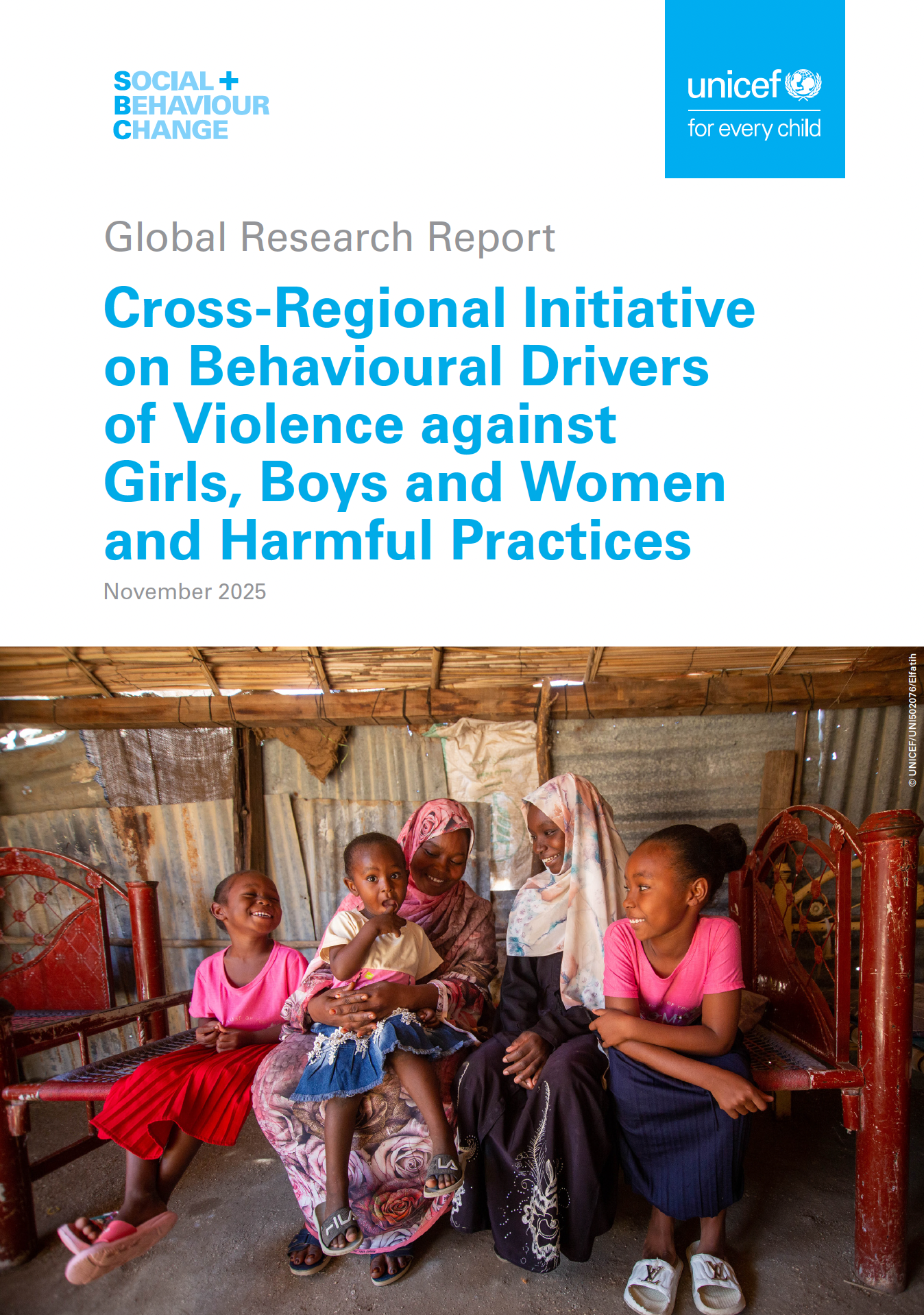
1. Global Report
2. Country Evidence Briefs
Child Marriage:
Female Genital Mutilation
Child Discipline
Child labour
Intimate Partner Violence
Sexual violence
3. Programme Monitoring Questionnaires
- Child Labour | Spanish | French
- Intimate Partner Violence | Spanish | French
- Sexual Violence | Spanish | French
- Child Discipline | Spanish | French
- Child Marriage | Spanish | French